| Children Display |
|---|
The UCCS Virtual Lab environment is an Azure a cloud based virtual lab computing platform that allows students and staff faculty to remotely access UCCS provided supported lab applications. This pilot program is designed for the purposes of application testing, load balancing, and cost analysis.
Get Involved!
The Open Lab
This service is initially limited to a single Open Lab style environment that includes a limited selection of general use and licensed applications available to everyone. Specific software or dedicated labs may be available by requestWe are currently looking for volunteers to help build this service into a useful and robust environment to meet our remote learning needs. Any students, faculty, or staff that could benefit from remote accessible lab systems or software are welcome! We will be opening the labs to dedicated courses and classes starting this summer. If you would like to get involved with our Virtual Labs rollout or have any input you would like considered, please contact [email protected].
Access Options and Instructions
You have three two options for accessing the Virtual Lab Systems: web browser, desktop app, or common RDP. Web Browser or Windows Remote Desktop Client
Preferred client Preferred source is a Microsoft Windows 10 OS or Edge browser. Mac users are limited to Internet Browser Access. Chromebook devices can may use all threeeither method.
Internet Browser Access
- Open a browser to Remote Desktop Web Client (microsoft.com). Microsoft Edge is preferred if you have issues with your existing browser.
- Enter UCCS SSO login credentials
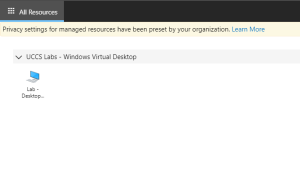
- Select the Lab Desktop icon under UCCS Labs - Windows Virtual Desktop:
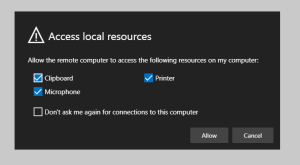
- Select local resources to make available, then Allow:
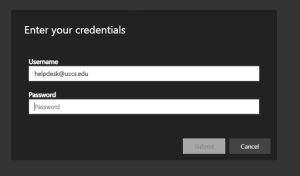
- Enter your domain email credentials:
- Virtual Lab Desktop will appear and work normally through the browser.
Windows Remote Desktop Client
- From a Windows desktop download the Microsoft Desktop application directly from Microsoft, or see the Microsoft KB for additional Microsoft Desktop Documentation and Downloads.
- Install application using default settings
- Open from Start Menu:
- Double-click on the Lab Desktop icon (or right click to modify connection settings first):
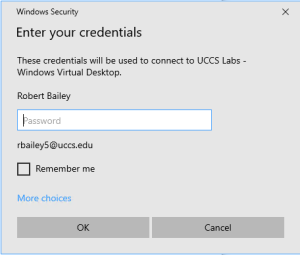
- Enter your domain email credentials then click OK:
- Remote Desktop Connection window will open normally.
Common Remote Desktop Protocol
- This method should only be used if you need a specific Virtual Lab host, instead of the next available in the pool. Please contact the Virtual Labs administrator for direct RDP access.


OneDrive, Profiles, and Data Storage
Any content saved on a Virtual Lab system not stored in your OneDrive or campus network shares will be lost! This includes all content in your local 'Downloads' directory and the system's 'Temp' directory.
...
The common shared drive mapping for your home directory and department directory are still in place, allowing you to manually save content to this storage if needed.
Available Software
- Internet Browsers
- Adobe Creative Cloud / Acrobat Pro DC
- Microsoft Office365 / Teams
- Microsoft PowerBI Desktop
- ArcGIS Desktop
- Zoom
- Read&Write
- Remote Desktop / PuTTY
- Cherwell Service Management
- Notepad++
- IBM SPSS / AMOS
- Microsoft RSAT: AD
Feedback and Reviews
With this pilot program, we are looking for feedback on your usage of the Virtual Lab systems to help improve the service before a campus release. Any questions, comments, and concerns you can share are valuable in assessing what still needs improvement and what is working for us. Any feedback is welcome, but we are paying specific attention to:
...